 English

Reading Time: 4 minutes
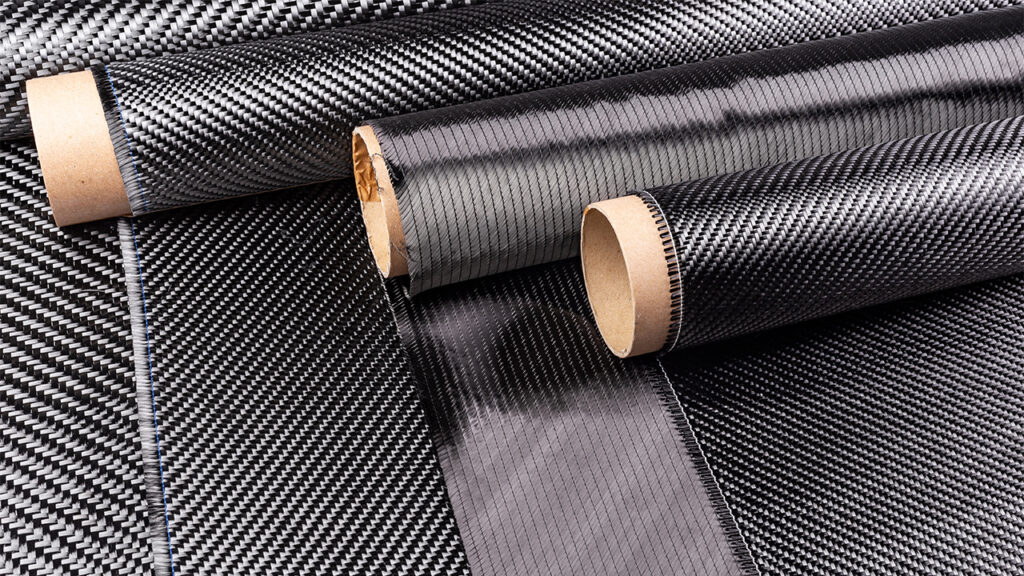
Across industries, manufacturers are replacing metals with lightweight plastic composites. Carbon fiber reinforced plastics (CFRPs) and thermoplastics (CFRTPs) are stiffer and up to ten times stronger than steel. They reduce the weight, emissions and energy costs of cars, airplanes and other transportation equipment.
However, these composites can weaken when exposed to high heat and other harsh elements. By combining CFRP/CFRTP with adhesive fluoropolymers, manufacturers can improve their heat resistance, mechanical strength and long-term durability.
What Are Carbon Fiber Composites?
Carbon fiber composites contain thin strands of carbon fiber embedded in a resin, such as epoxy or vinyl ester. The carbon fiber reinforces the resin and provides a high tensile strength of 4,000 MPa. These strong, lightweight composites are ideal for demanding applications, including aerospace, ground transportation and electronics.
How Fluoropolymers Enhance Carbon Fiber Composites
Adhesive fluoropolymers enhance the strength and durability of CFRP/CFRTP materials. Fluoropolymers have a strong carbon-fluorine bond, which imparts unique properties, including thermal resistance, chemical resistance, mechanical strength and electrical insulation. These advanced materials provide a variety of performance benefits for composites:
Wide Temperature Range
CFRP/CFRTP contains engineered resins that must be processed at high heat, which can damage the composite. The heat creates small voids at the polymer-fiber interface, weakening the material. Manufacturers can prevent defects by combining CFRP/CFRTP with fluoropolymers, which can withstand temperatures from -200 ℃ to 260 ℃.
Strong Adhesion
Adhesive fluoropolymers enable CFRP/CFRTP to bond to a variety of metal bases, including copper, titanium and stainless steel. When applied in adhesive layers between CFRP/CFRTP and the metal base, they prevent galvanic corrosion. These materials also bind carbon fibers and incorporate them into the polymer matrix.

High Impact and Flexural Strength
Fluoropolymers increase the impact and flexural strength of CFRP/CFRTP. They enable parts to absorb shock without cracking, preserving their integrity. In a study by AGC, CFRTP modified with fluoropolymers had a 75% higher flexural-strength ratio than standard CFRP. Fluoropolymers were also shown to boost the impact strength of various modified plastics.

Low Water Absorption
The base polymers in CFRP/CFRTP can degrade when exposed to water. Fluoropolymers can modify these polymers to reduce their water absorption properties, preserving the composite’s integrity and mechanical strength.

Flame Resistance
Fluoropolymers provide exceptional flame resistance for CFRP/CFRTP. They are thermally stable, enabling composites to withstand temperatures up to 260 ℃ and resist ignition. Composites made with fluoropolymers are ideal for producing critical components in aerospace and transportation, which are often exposed to high heat.
Vibration Damping
Treating the surface of carbon fiber composites with fluoropolymers enhances their vibration damping properties. The surface layer absorbs kinetic energy from vibrations, preventing cracks or tears from developing.
Superior Dielectric Properties
Fluoropolymers are stable resins with a low dielectric constant. They enable CFRP/CFRTP to transmit electrical signals with minimal energy loss. This property makes them ideal for applications such as printed circuit boards and automotive parts, which require low transmission loss.
AGC’s Fluon+™ Composites
AGC offers advanced Fluon+™ Composites, which are adhesive fluoropolymers combined or laminated with CFRP or CFRTP. These versatile materials are available in solid or liquid form to meet a variety of applications. They deliver exceptional heat resistance, dielectric properties, impact strength and flame retardancy. These properties enable them to withstand the challenging conditions of aerospace, automotive and electronics applications.
Fluon+ EA-2000
Fluon+ EA-2000 is an ideal grade for use in carbon fiber composites. This durable resin provides a variety of performance benefits:
- Effective heat resistance: EA-2000 enables carbon fiber composites to resist high heat up to 260 °C. It prevents defects due to outgassing during high heat processing.
- High flexural strength: CFRP/CFRTP made with EA-2000 has a higher flexural strength than standard composites. This grade enables parts to withstand stress without breaking.
- Strong adhesion: This grade has strong adhesion that binds carbon fibers together in the polymer matrix. It also has excellent adhesion to a variety of engineered resins used in CFRP/CFRTP.

Reinforce Carbon Fiber Composites With Fluoropolymers
Although CFRP/CFRTP is becoming a popular replacement for metals, it needs additional reinforcement. By combining carbon fiber composites with adhesive fluoropolymers, manufacturers can improve their heat resistance and strength to ensure long-lasting durability. Explore the grades of Fluon+ Composites to find the best fit for your application. To learn more about our solutions, contact an AGC representative.