 English


Reading Time: 3 minutes
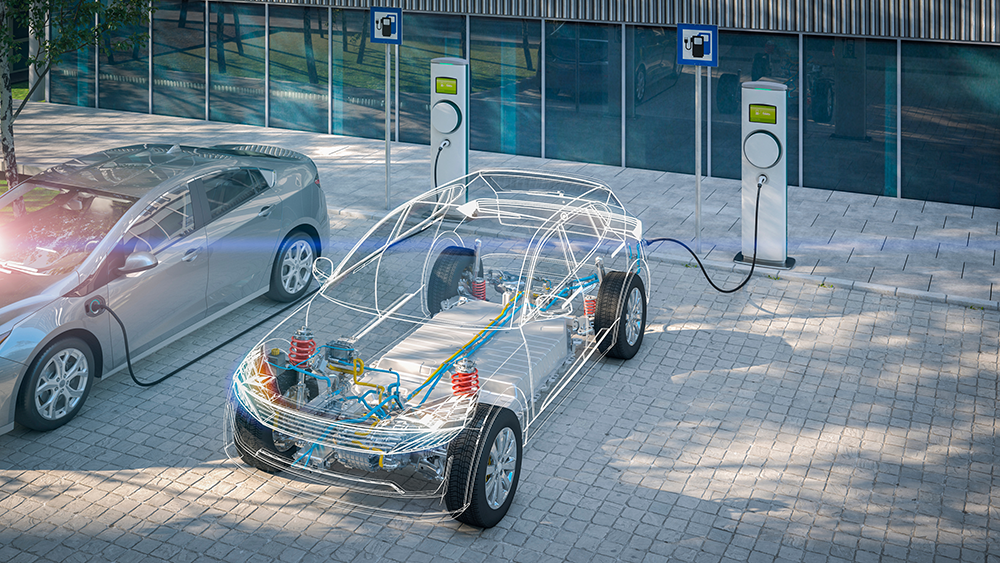
Fluoropolymers in electric vehicles (EVs) help protect components exposed to heat, chemicals, electrical stress and outdoor conditions. These can be components of batteries or vehicle subsystems.
EV innovation is often discussed in terms of battery chemistry, range and charging speed. Yet EV subsystems—from cell manufacturing and power electronics to thermal management, high-voltage wiring and charging equipment—also depend on materials that withstand demanding operating conditions.
Fuoropolymers are candidates for demanding EV applications because they possess a unique combination of chemical resistance, thermal stability, electrical-insulation properties and weatherability. Suitability depends on the specific material, component design and operating conditions.
Where are fluoropolymers used in electric vehicles?
Higher power density and faster charging increase thermal and electrical demands. Also, new battery chemistries and compact packaging make chemical compatibility and material selection increasingly important. Fluoropolymers can support five areas of the EV value chain:
- Battery materials and manufacturing processes
- High-voltage wiring and electrical insulation
- Thermal-management systems
- Seals and protective components
- Charging infrastructure and power electronics
How are fluoropolymers used in battery manufacturing and packaging?
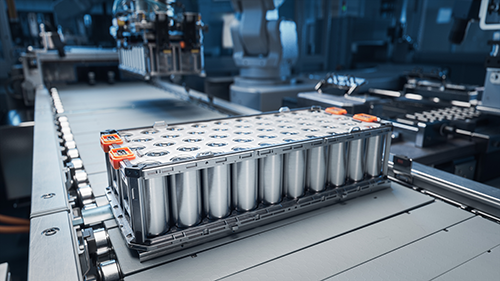
Fluoropolymers already play an important role in battery development. Binder technologies can help hold active materials and conductive additives together within an electrode, while fluoropolymer-lined or protected processing equipment can provide resistance to chemicals encountered during manufacturing.
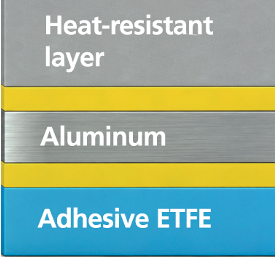
In addition, AGC has developed high-heat-resistant pouch-film that blocks moisture to protect battery performance. The structure combines a heat-resistant layer, aluminum and adhesive ETFE to provide heat resistance, moisture protection and formability.
Test results illustrate the pouch film does not melt during heat sealing and can be easily shaped.
| Test | Results |
| Heat-cycle performance | AGC pouch film endured 100 cycles at 170 degrees C with no discoloration; the conventional pouch film failed at 37 cycles. |
| Deep drawing | The film achieved a draw depth of more than 15 mm. |
| Moisture barrier | Water-vapor transmission was below the measurement limit of 0.0001 g/m2 per 24 hours. |
Fluon+™ Adhesive ETFE powder is another example of a fluoropolymer resin that is well-suited for battery-related use. The material combines controlled particle size with strong adhesion to metals. AGC testing demonstrated an adhesive strength of 18 N per 10 mm on aluminum and 19 N per 10 mm on nickel-plated copper.
Initial electrochemical evaluation of the ETFE powder showed performance comparable to, or with fewer side reactions than PVDF. Because battery performance depends on the complete electrode formulation and process, engineers should validate the material in their specific design and operating conditions.
How do fluoropolymers protect EV high-voltage wiring?
EV wiring, busbars and connectors must carry substantial power within compact architectures while resisting heat, fluids and environmental exposure. Fluoropolymer insulation and protective layers can help maintain electrical performance under temperature cycling and tight packaging constraints.
What role can fluoropolymers play in EV thermal management?
Fluoropolymer materials provide heat and chemical resistance for seals and other components exposed to EV cooling fluids. They can help prevent degradation, swelling, embrittlement and contamination that could compromise thermal management performance. Material selection depends on coolant chemistry, operating temperature, pressure, component geometry and processing requirements.
How do fluoropolymer seals protect EV components?
Fluoropolymer-based seals help protect batteries, motors, inverters and charging hardware from moisture, dust and road chemicals while withstanding heat and movement. Maintaining seal integrity is essential for electrical protection and reliable operation. Engineers must consider the full service environment, including compression, temperature cycling, fluid exposure and expected service life, when selecting sealing materials.
Where are fluoropolymers used in EV charging and power electronics?
Onboard inverters and converters face high electrical and thermal loads, while public and residential chargers must also withstand outdoor exposure.
Fluoropolymers can provide insulation and weatherability in selected power-electronics and charging components, potentially reducing maintenance over their service life.
What should engineers consider when selecting EV fluoropolymers?
Across these applications, material selection affects four outcomes:
Safety: insulation, barriers and seals help isolate electrical energy and protect sensitive components.
Reliability: retaining critical properties under expected thermal, chemical and electrical stresses.
Service life: reducing the risk of premature component replacement.
Maintenance: reducing interruptions and lifecycle costs.
Selection should balance operating conditions, component design, manufacturability and validation testing.
Fluoropolymer materials for the next generation of EVs
Faster charging, higher power density, evolving battery chemistries and sustainability expectations will continue to change material requirements.
Fluoropolymers can serve multiple EV design needs, from electrode-related materials and developmental pouch films to insulation, coolant-contact components, seals and charging equipment. The best choice requires application-specific testing.
Learn more about how AGC materials can support the next generation of electrification. Contact AGC to discuss your application requirements and identify fluoropolymer solutions for evaluation.