 English

Reading Time: 4 minutes
Lithium is a critical raw material for clean energy technologies. It is used to produce lithium-ion batteries that power electric vehicles and energy storage systems. As more companies transition to clean energy, demand for lithium is projected to rise from about half a million metric tons in 2021 to 3 million metric tons by 2030, according to McKinsey & Company. To meet this demand, producers must improve operational efficiency. The direct lithium extraction process (DLE) and membrane electrolysis offer faster, cleaner and more sustainable alternatives to conventional lithium production methods.
What Is the Direct Lithium Extraction Process?
The direct lithium extraction process (DLE) is a technology that selectively removes lithium ions from underground brine using membranes, adsorbents, ion exchange materials or solvent extraction systems. Unlike traditional evaporation ponds, the direct lithium extraction process can recover lithium in weeks rather than months while using less water, less land and significantly less energy.
Primary Methods of Lithium Production
Lithium is primarily found in spodumene ore and underground brine reservoirs. Conventional extraction methods involve crushing hard rock or evaporating water from brine. However, these methods are energy intensive, consume significant natural resources and generate substantial carbon emissions. The direct lithium extraction process offers a more efficient alternative. Common methods of lithium production include:
Hardrock Mining
Hardrock mining uses heavy machinery to crush spodumene ore and grind it into powder. The powder is then roasted and leached with sulfuric acid to separate the lithium. On average, mining releases about 15 tons of carbon dioxide for every ton of lithium produced. It also creates open mine pits that can destroy local habitats and harm the environment.
Solar Evaporation
Solar evaporation accounts for nearly half of global lithium production. Pumps draw brine from aquifers into large ponds, where the water evaporates and lithium remains. This method has a relatively low recovery rate of 40% to 60% and can take 12 to 18 months before lithium reaches the desired concentration. Large evaporation ponds also consume significant water resources and alter local ecosystems. Once the brine evaporates, the soil becomes barren and unable to support plant life.
Direct Lithium Extraction (DLE)
The Direct lithium extraction (DLE) process offers a cleaner, more efficient way to produce lithium. One DLE method uses ion-exchange membranes and membrane electrolysis to quickly separate lithium from brine. An electrical current drives lithium ions through highly selective membranes while impurities remain behind. The result is a concentrated lithium solution that requires less downstream processing than conventional extraction methods.
Benefits of the Direct Lithium Extraction Process
Compared with conventional mining and evaporation ponds, the direct lithium extraction process offers several important advantages:
- Lower carbon emissions: DLE technologies release about 50% fewer emissions than many other conventional methods. They use significantly less energy than mining, which requires extreme temperatures to heat ore.
- Lower water consumption: DLE consumes less water than evaporation ponds and achieves high recovery rates of 90%, extracting more lithium per liter of brine. Unused water can be returned to aquifers, minimizing environmental impact.
- Faster production: Lithium can be extracted in as little as two weeks rather than the 12 to 18 months often required for solar evaporation.
- Higher lithium recovery: Advanced membrane technologies recover more lithium from every liter of brine, improving overall process efficiency.
Lithium Hydroxide Production
Following the direct lithium extraction process, concentrated lithium brine is further refined into battery-grade lithium hydroxide (LiOH), an essential material for lithium-ion batteries.
Traditionally, lithium hydroxide production requires multiple chemical precipitation steps. Membrane electrolysis provides a cleaner, more energy-efficient alternative that reduces waste while producing exceptionally high-purity lithium hydroxide.
Key benefits include:
- Smaller carbon footprint
- Compatibility with renewable energy
- Battery-grade lithium hydroxide purity (>99.5%)
- Reduced reagent consumption
- Lower waste streams
AGC FORBLUE™ Membranes for the Direct Lithium Extraction Process
AGC Chemicals Americas offers a variety of FORBLUE™ membranes specifically engineered to improve the direct lithium extraction process and lithium hydroxide production. These durable membranes provide excellent chemical resistance, high ion selectivity and low electrical resistance to improve efficiency while reducing energy consumption.
SELEMION™ Membranes

FORBLUE™ SELEMION hydrocarbon membranes are well suited for the direct lithium extraction process. They concentrate lithium ions using electrodialysis, allowing manufacturers to efficiently separate lithium from brine while minimizing impurities. Key benefits include:
- High ion selectivity
- Thin membrane
- Low resistance
- High strength
S-SERIES and FLEMION™ Membranes
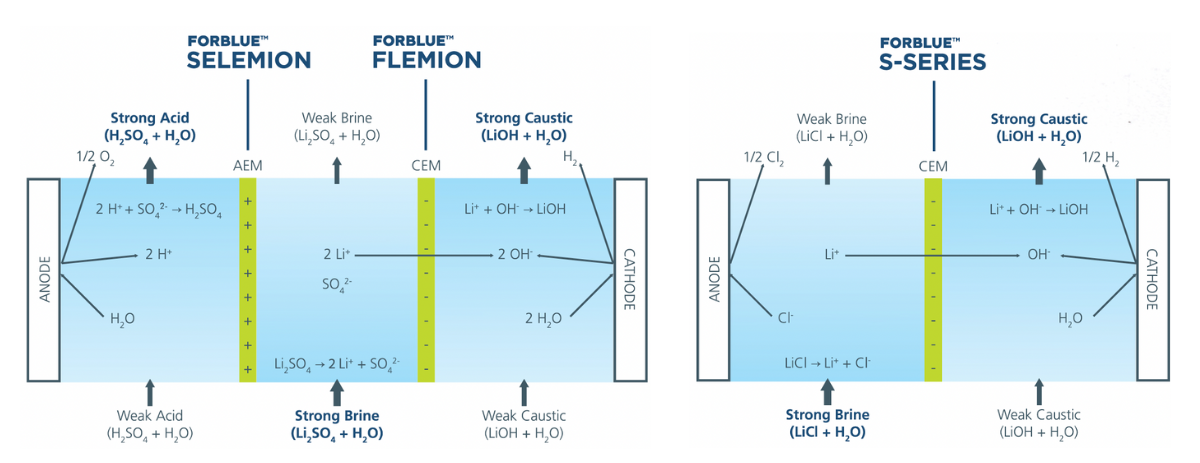
FORBLUE S-Series and FLEMION grades are fluorinated cation exchange membranes used to produce high-purity lithium hydroxide or recycle lithium battery streams via electrolysis. Their high ion selectivity increases product purity while reducing energy consumption. Made from fluorinated resins, they also deliver exceptional chemical resistance and long service life in demanding processing environments.
Frequently Asked Questions About the Direct Lithium Extraction Process
What is the direct lithium extraction process?
The direct lithium extraction process (DLE) selectively removes lithium ions from underground brine using advanced technologies such as ion exchange membranes, adsorption materials or solvent extraction instead of relying on large evaporation ponds.
Why is the direct lithium extraction process better than evaporation ponds?
Compared with evaporation ponds, the direct lithium extraction process uses less water, requires less land, produces lower carbon emissions, achieves higher lithium recovery rates and reduces production time from more than a year to just a few weeks.
How do ion exchange membranes improve lithium extraction?
Ion exchange membranes selectively transport lithium ions while rejecting unwanted salts and impurities. This improves lithium concentration, increases recovery rates and lowers overall energy consumption.
Can the direct lithium extraction process support lithium recycling?
Yes. Many of the same membrane technologies used in the direct lithium extraction process are also used to recover lithium from spent batteries and to produce high-purity lithium hydroxide for new battery manufacturing.
Enhance Lithium Processing With Advanced FORBLUE Membranes
AGC’s FORBLUE membranes improve the direct lithium extraction process by reducing energy consumption, increasing lithium recovery, improving product purity and extending membrane durability. As global lithium demand continues to grow, advanced membrane technologies will play a critical role in scaling sustainable lithium production and battery recycling.