 English

Reading Time: 8 minutes
Fluon ETFE (ethylene tetrafluoroethylene) films are changing the way architects design modern buildings. A lightweight, durable, and energy-efficient material, ETFE film products have become a preferred choice for membrane structures, facades, and roofing systems that combine bold design with outstanding performance.
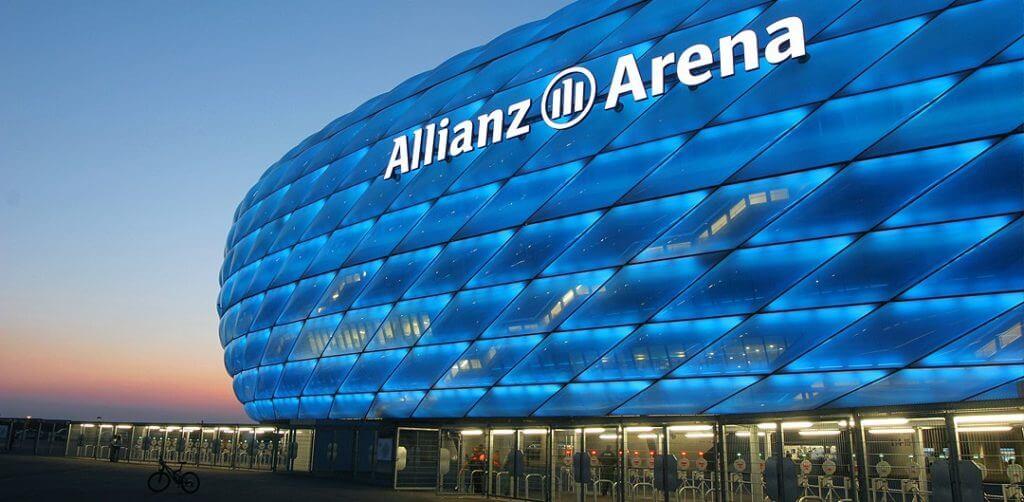
One of the biggest advantages of ETFE film products is their design flexibility. They make it possible to create lightweight, semi-transparent structures that are visually dramatic, colorful, and beautifully illuminated. From iconic stadiums to public venues and commercial developments, ETFE film products help shape the world’s most innovative architectural projects.
Beyond their visual impact, ETFE film products offer significant environmental and energy-efficiency advantages. Compared with traditional glass, ETFE lets more natural daylight into a building while reducing overall structural weight. This can improve energy efficiency , lower construction costs and support sustainable building goals, including projects pursuing LEED (Leadership in Energy and Environmental Design) certification.
ETFE is also a durable and environmentally responsible material. It is fully recyclable, requires fewer raw materials than conventional glazing systems, and features a self-cleaning surface that reduces maintenance and minimizes the need for chemical cleaning. The result is a high-performance building material that offers lasting value while supporting more sustainable construction.
What Are ETFE Film Products?
ETFE film products are lightweight, high-performance fluoropolymer films that have become a popular choice in modern architecture. They are widely used in roofing systems, tensile structures, facades, skylights, and transparent building envelopes because of their unique combination of strength, flexibility, and durability. In many applications, ETFE provides an effective alternative to traditional glazing materials.
ETFE film products are valued for:
- High light transmission for bright, naturally lit spaces
- Lightweight construction that reduces structural loads
- Outstanding resistance to weathering and UV exposure
- Long-term durability with minimal maintenance
- Thermal insulation performance
- Sustainability and recyclability
- Exceptional design flexibility for creative architectural solutions
Because ETFE films weigh significantly less than glass, architects and engineers can design larger, more open structures while reducing the amount of steel needed for support. The result is greater structural efficiency, lower construction costs, and more freedom to create innovative architectural designs..
ETFE Film Products Offer More Than Glass
ETFE film products are changing the way buildings are designed by providing a lightweight, high-performance alternative to traditional glass. Because ETFE weighs far less than glass, it requires less structural support, giving architects and engineers the freedom to create large-span buildings with less steel and other heavy construction materials. The result is a lighter structure that can reduce both construction costs and overall building loads.
Builders also can also potentially reduce energy costs by up to 30% compared to glass because ETFE film allows:
- More than 90% light transmission
- High heat retention
- Increased use of natural daylight
These performance benefits make ETFE film ideal for sustainable architecture, sports venues, transportation hubs, atriums, and large public structures.
Interior Climate Control with ETFE Film Products
In addition to creating bright, comfortable indoor spaces with less reliance on artificial lighting, ETFE systems help maintain consistent indoor temperatures, which can lower heating and cooling demands compared with conventional glazing systems.
Architects can select different ETFE film types and surface treatments to regulate the amount of light and heat entering a structure. This flexibility improves interior climate control while helping reduce operating costs.
ETFE film products help:
- Maximize natural daylight with full-spectrum transmission.
- Reduce heating and electric lighting costs.
- Reflect solar heat with frit print options, reducing air conditioning loads.
- Support natural ventilation strategies in large public venues.
Architectural Projects Featuring ETFE Film Products
The following innovative structures utilize ETFE film in their roofing systems for greater climate control, transparency, and durability.
SoFi Stadium, Inglewood, CA
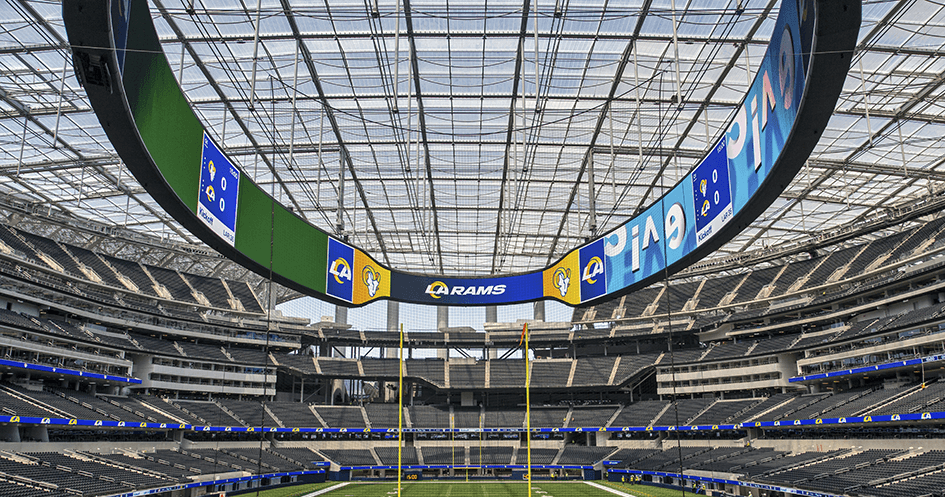
SoFi Stadium, home to the Los Angeles Chargers and Los Angeles Rams, seats more than 70,240 people and can accommodate over 100,000 visitors for larger events. The state-of-the-art venue features open sides and three venues beneath a single fixed roof.
Spanning nearly 75,000 square meters of ETFE film, the roof is the world’s largest single membrane, cable-supported roof. Designed by HKS Architects, the translucent ETFE canopy protects spectators from the elements while allowing natural sunlight to fill the stadium, creating a bright and comfortable environment.
The ETFE film incorporates a custom frit print that helps reduce solar heat gain without sacrificing daylight. Its lightweight construction also reduces structural steel requirements, while the durability of the fluoropolymer material delivers long-lasting performance and minimal maintenance.
Intuit Dome, Inglewood, CA
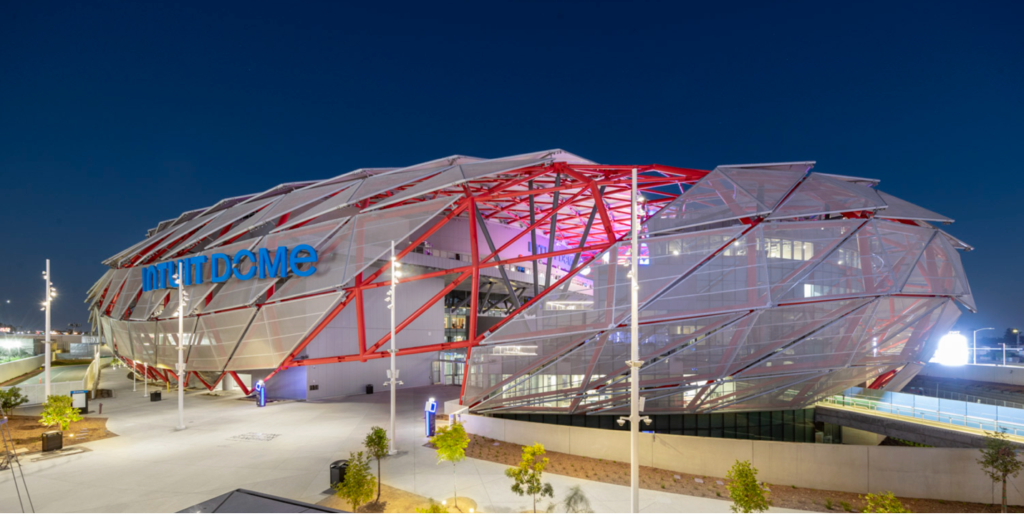
Intuit Dome, home of the Los Angeles Clippers, showcases how ETFE film products can enhance both the performance and appearance of a modern sports venue. Beyond creating a striking visual appearance, the ETFE roofing system maintains a comfortable indoor environment for fans attending basketball games, concerts, and entertainment events.
The arena’s roof combines approximately 11,400 square feet of ETFE panels with more than 228,700 square feet of PTFE panels, supported by a 2,800-ton steel diagrid shell designed to resemble a basketball net.
Configured in a diamond-shaped lattice pattern, the PTFE and ETFE panels work together to manage sunlight, reduce glare, promote airflow, and provide protection from the elements. ETFE panels are placed in more transparent areas of the roof to bring in natural daylight, helping reduce reliance on artificial lighting while supporting natural ventilation and overall sustainability goals.
Nu Stadium, Miami, FL
Nu Stadium is a climate-responsive soccer venue that incorporates ETFE film into its lightweight roof system. Designed as the home of Inter Miami CF, the stadium combines structural efficiency with enhanced fan comfort and visual openness. Its cable-supported “spoked-wheel” roof system is the first stadium roof of its kind in the United States.
The ETFE roof panels soften and diffuse daylight into the concourse and seating areas while providing protection from intense sunlight and rain. Because ETFE films are extremely lightweight, they reduce stress on the long-span cable roof structure and improve overall design efficiency.
The stadium’s open-sided roof further enhances the fan experience by encouraging natural airflow and ventilation. This design approach minimizes the need for enclosed, air-conditioned spaces while keeping spectators comfortable.
2022 Beijing Winter Events
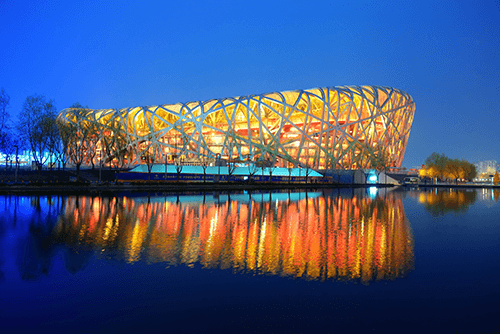
Fluon ETFE film played a role in the 2022 Winter sporting events in Beijing, as two iconic venues originally built for the 2008 Games were repurposed for the international competition. The National Stadium, known as the “bird’s nest” because of its shape, once again hosted both opening and closing ceremonies. When the stadium was originally constructed, it incorporated approximately 50,000 square meters of Fluon ETFE film as part of its innovative building envelope.
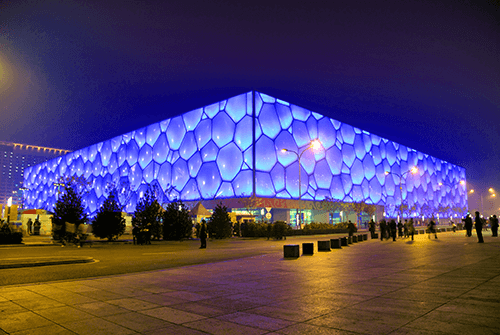
The National Aquatics Center, often called the “Water Cube” during the 2008 Games and transformed into the “Ice Cube” for the 2022 Winter Events, hosted the curling matches. The venue features approximately 300,000 square meters of Fluon ETFE film, which was installed during its original construction.
Forsyth Barr Stadium in Dunedin, New Zealand
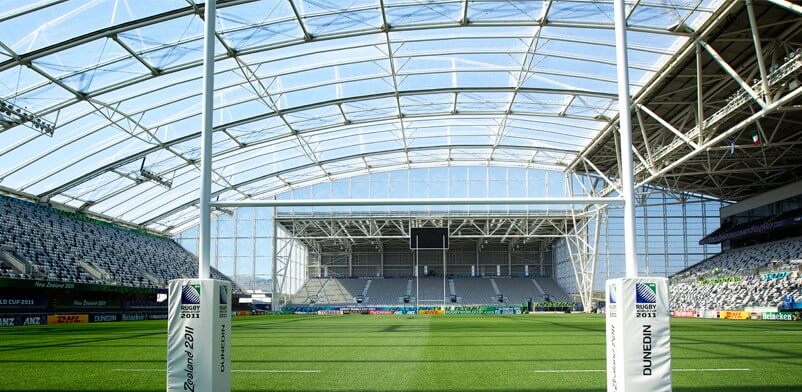
Forsyth Barr Stadium highlights how ETFE film can solve complex architectural and environmental challenges. As the stadium’s primary roofing material, ETFE allows the venue to support a natural grass playing surface while operating as a fully enclosed, year-round facility. When it opened in 2011, the 30K capacity, multi-purpose arena became the world’s first permanently enclosed stadium with a natural grass pitch.
Because Dunedin’s climate is often cold and wet, the stadium was enclosed to create an “all-weather” venue that would keep spectators comfortable while attending sporting events, cultural performances, and entertainment activities throughout the year. Designers opted to create something never seen before – an enclosed stadium with a natural grass surface.
To find the ideal roof material, the design team conducted a two-year testing program using different roof materials to evaluate grass growth and playing conditions. ETFE film products proved to be the obvious choice, producing turf that was healthier and greener than grass grown outdoors. Its excellent light transmission, natural ventilation capabilities, and ability to control sunlight exposure helped create the conditions needed for a successful indoor grass field.
Designers specified ETFE film to cover the stadium roof and part of the facades. To maximize sunlight on the pitch, the northern stands were designed at a lower height, allowing natural light to reach the playing surface. The end facades were positioned approximately 5 meters above ground to allow fresh air movement across the field, supporting natural ventilation and maintaining optimal growth conditions for the grass.
See it in action!
Khan Shatry Entertainment Center, Astana, Kazakhstan
The Khan Shatyr Entertainment Center uses ETFE as the primary material for its iconic tensile roof structure. The translucent ETFE membrane helps create a comfortable environment for the center’s expansive mix of attractions, including an indoor park, retail shops, restaurants, theatres, exhibition space, and water park despite the region’s extreme climate conditions.
The building is designed to withstand dramatic temperature swings, with outdoor conditions ranging from winter lows of approximately -31°F to summer highs of 95°F. The ETFE roof helps regulate the interior environment, allowing visitors to enjoy the year-round space regardless of the weather outside.
The ETFE membrane is stretched over a network of steel cables to form the building’s dramatic sloped silhouette. Its lightweight properties allowed architects to create the expansive structure with less structural support while allowing natural daylight to filter deep into the interior spaces.
Why Architects Choose ETFE Film Products
As the construction industry continues to focus on sustainable, energy-efficient, and high-performance building materials, ETFE film products are becoming an increasingly popular choice among architects and designers. Their unique combination of lightweight construction, durability, energy efficiency, and design flexibility makes them an innovative solution for the next generation of commercial buildings, architectural landmarks, and sports stadiums.
These venues demonstrate the long-term durability, performance, and versatility of ETFE film, showing how the material can continue to support world-class architecture and major international events for decades. We’re proud to be a part of these incredible structures. For information on how ETFE film can help bring beauty and function to your architectural project, contact our experts.
Frequently Asked Questions about ETFE film products
What are ETFE film products?
ETFE film products are lightweight, high-performance fluoropolymer films used in modern architecture as an alternative to glass. They combine exceptional light transmission, weather resistance, durability, and design flexibility, making them ideal for roofing systems, facades, skylights, tensile structures, and transparent building envelopes. Because ETFE film weighs significantly less than glass, it allows architects to create larger, more open structures while reducing structural loads and maintenance requirements.
Why are ETFE film products replacing glass in architecture?
Architects increasingly choose ETFE film products over traditional glass because they provide many of the same visual benefits while offering significant performance advantages. ETFE film weighs a fraction of glass, reducing the amount of structural steel required and lowering construction costs. It transmits more than 90% of natural daylight, helps improve energy efficiency, resists UV exposure and weathering, and features a self-cleaning surface that minimizes maintenance. These advantages make ETFE an excellent choice for sustainable, high-performance building designs.
How long do ETFE film products last?
ETFE film products are designed for long-term outdoor performance. They resist ultraviolet radiation, harsh weather, temperature extremes, and environmental degradation while maintaining their strength and transparency. Their durability is demonstrated by major architectural projects around the world that have relied on ETFE roofing and facade systems for decades with minimal maintenance, making them a long-lasting solution for commercial buildings, stadiums, and public venues.
Are ETFE film products recyclable?
Yes. ETFE film products are fully recyclable, making them an environmentally responsible building material. Compared with conventional glazing systems, ETFE requires fewer raw materials, reduces structural weight, and supports sustainable building practices. Its long service life, recyclability, and ability to improve energy efficiency contribute to lower environmental impacts over the life of a building and can support projects pursuing green building certifications such as LEED.
Where are ETFE film products commonly used?
ETFE film products are widely used in commercial and public buildings that require lightweight, transparent, and durable building materials. Common applications include stadium roofs, sports arenas, transportation hubs, atriums, skylights, tensile membrane structures, facades, and large architectural canopies. Notable examples include SoFi Stadium in California, Intuit Dome, the National Stadium and National Aquatics Center in Beijing, Forsyth Barr Stadium in New Zealand, and the Khan Shatyr Entertainment Center in Kazakhstan. These projects demonstrate how ETFE film products enable innovative designs while improving energy efficiency, natural daylighting, and occupant comfort.
SoFi Stadium images courtesy of PFEIFER Structures USA.