 English

Reading Time: 5 minutes
ETFE material is a high-performance fluoropolymer designed for demanding industrial applications where components must withstand aggressive chemicals, elevated temperatures, UV exposure, and continuous mechanical stress. Its unique combination of chemical resistance, mechanical toughness, thermal stability, and processability makes it ideal for wire and cable, semiconductor, energy and chemical processing applications.
What Is ETFE Material?
ETFE (ethylene tetrafluoroethylene) material is a high-performance, melt-processable fluoropolymer that combines exceptional chemical resistance, mechanical toughness, electrical insulation, UV durability, and thermal stability. Unlike many engineering plastics, it offers the processing advantages of thermoplastics with the durability of fluoropolymers.
However, not all ETFE resins perform the same. Differences in material formulation, polymer design and manufacturing expertise can significantly impact mechanical performance, long-term reliability and overall service life.
What is Fluon® ETFE?
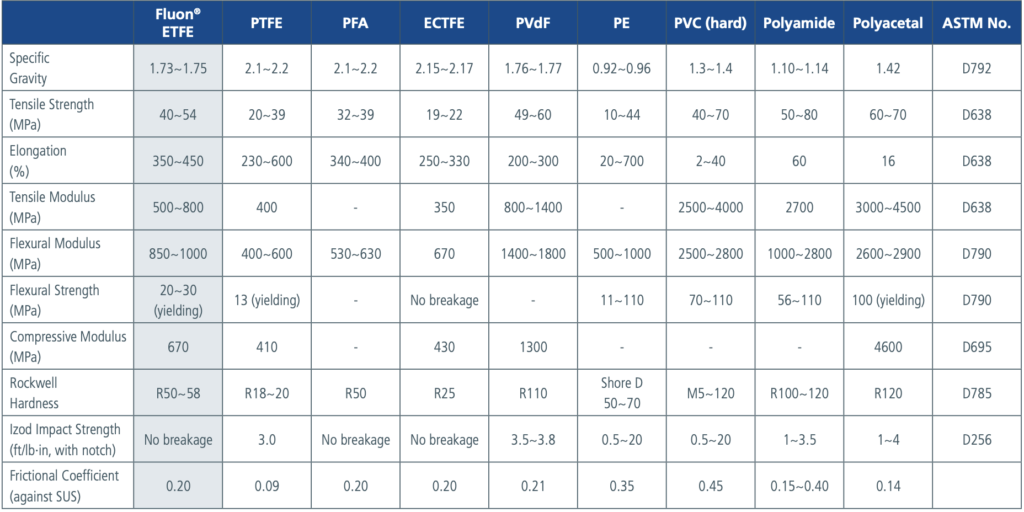
Fluon® ETFE is AGC’s family of high-performance ETFE resins manufactured from ethylene and tetrafluoroethylene. It combines exceptional chemical resistance, mechanical strength, and thermal stability with excellent processability for demanding industrial applications. Compared with other fluoropolymer materials like ECTFE and PVdF, Fluon ETFE offers superior mechanical strength and improved moldability, as shown in the table below.
By combining the exceptional durability of fluoropolymers with the process advantages of thermoplastics, Fluon ETFE materials enable manufacturers to produce complex, durable components that withstand harsh operating conditions while reducing maintenance requirements and the risk of premature failure.
ETFE resins are available in pellet or powder forms and can be processed using a variety of manufacturing methods, including:
- Extrusion
- Injection Molding
- Blow molding
- Electrostatic powder coating
- Rotolining/rotomolding
Because ETFE material is melt-processable, manufacturers can produce complex, high-performance components more efficiently than with many other fluoropolymers.
To meet the needs of diverse applications, they are available in a range of formulations including, color masterbatches, custom-reinforced grades, and materials with tailored conductivity levels for specialized performance.
Comparison Table: ETFE Material Versus Other Fluoropolymers
| Property | ETFE | PVDF | ECTFE |
| Mechanical toughness | Excellent | Good | Very Good |
| Chemical resistance | Excellent | Excellent | Excellent |
| Heat resistance | Excellent | Good | Good |
| Flex fatigue | Excellent | Moderate | Moderate |
| UV resistance | Excellent | Excellent | Good |
| Processability | Excellent | Excellent | Good |
Critical-Grade Portfolio
AGC offers several ETFE grades designed for critical applications:
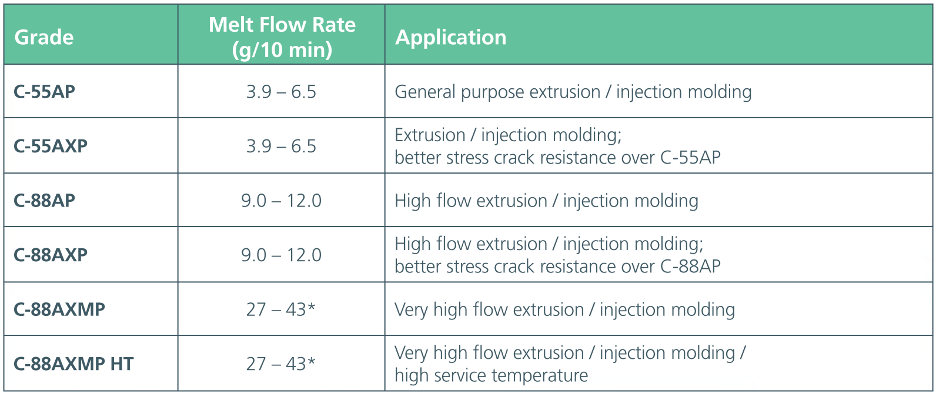
Low-melting LM-ETFE material offers the same chemical resistance and mechanical toughness as conventional ETFE while reducing processing temperatures by approximately 30–40°C. This improves manufacturing efficiency, enables co-processing with engineering thermoplastics, and provides greater flexibility for complex part designs.
Fluon LM-ETFE AH grades are adhesive fluoropolymer resins that can bond directly to a wide range of substrates during melt processing. Unlike conventional fluoropolymer systems, these materials eliminate the need for separate adhesives or surface treatments.
Why ETFE Materials Deliver Long-Term Reliability
Fluon ETFE maintains its mechanical, electrical, and dielectric properties across a continuous service range of -200°C to 200°C. High tensile strength, excellent elongation, and exceptional flex-fatigue resistance help components withstand repeated mechanical stress, while optical clarity and excellent processability simplify manufacturing.
Compared with many conventional fluoropolymers, Fluon ETFE offers greater flexibility and higher mechanical strength, enduring more than 100,000 flex cycles without failure. Its relatively low melting temperature also simplifies melt processing while delivering excellent optical clarity.
For applications where fire performance is important, AGC provides a Fluon LM-ETFE grade with a limiting oxygen index (LOI) of approximately 40%, significantly higher than the roughly 31% typical of many alternative materials. Combined with outstanding resistance to heat and chemical attack, Fluon ETFE is a dependable choice for demanding applications, requiring long-term performance in harsh operating environments. All Fluon ETFE resins are UL 94 V-0 rated for excellent flame resistance.
with a limiting oxygen index (LOI) of approximately 40%, significantly higher than the roughly 31% typical of many alternative materials. Combined with outstanding resistance to heat and chemical attack, Fluon ETFE is a dependable choice for demanding applications, requiring long-term performance in harsh operating environments. All Fluon ETFE resins are UL 94 V-0 rated for excellent flame resistance.
ETFE Materials Provide Exceptional Stability
- Thermal Stability: Fluon® ETFE withstands repeated heating and cooling cycles while maintaining mechanical integrity and dimensional stability, helping extend service life in high-temperature applications.
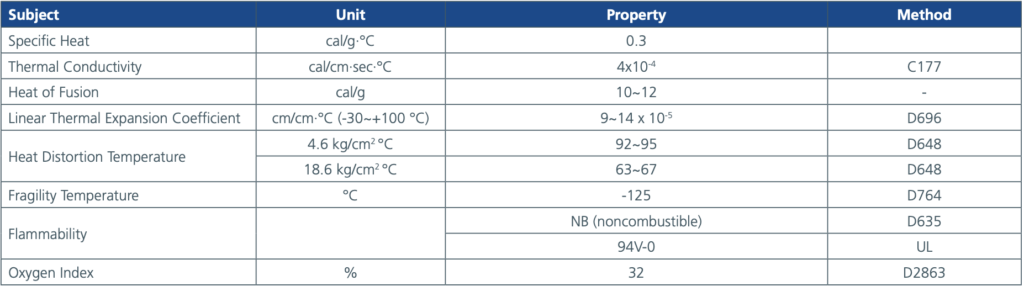
- Chemical Stability: Fluon ETFE provides excellent chemical resistance to a broad range of aggressive chemicals, including inorganic acids, bases, and organic solvents while minimizing swelling, cracking, embrittlement, and other forms of chemical degradation. This helps maintain long-term performance in corrosive environments.
- Mechanical Stability: Unlike many engineering plastics that can become brittle or lose strength over time, Fluon ETFE maintains an excellent balance of strength, elongation, toughness, and impact resistance, allowing components to withstand vibration, repeated operating cycles, and mechanical loading without compromising performance.
- Electrical Stability: Fluon ETFE provides excellent electrical insulation performance, with high dielectric strength, low moisture absorption, and stable electrical properties over a wide temperature range. These characteristics make it an ideal material for demanding electrical and electronic applications.
Long Service Life in Harsh Environments
Many conventional thermoplastics gradually lose strength, toughness, and flexibility when exposed to elevated temperatures over time. Fluon ETFE resins are engineered to retain their critical mechanical, thermal, and electrical properties over extended service periods, even in demanding high-temperature environments.
Fluon ETFE resin also resists UV radiation, weathering, and ionizing radiation, making it well suited for long-term outdoor service. Accelerated weathering tests showed virtually no deterioration after 16,000 hours—equivalent to approximately 30 years of outdoor exposure.
Common ETFE Material Applications
For more than 50 years, Fluon ETFE resins have delivered reliable performance in demanding industrial applications. Their unique combination of mechanical toughness, chemical resistance, thermal stability, and UV durability makes them well-suited for a broad range of high-performance components, including:
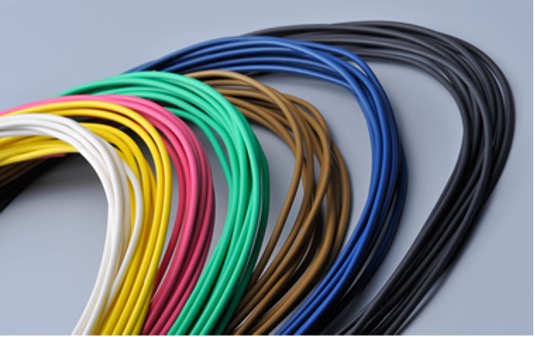
- Wire & cable (automotive, aerospace, industrial, fiber optics, electric vehicles)
- Tubing and piping
- Films and sheets
- Semiconductor components
- Electronic components
- Pumps
- Valves
- Chemical processing equipment
- Tank linings
- Industrial coatings
Supporting More Sustainable Designs
Fluon ETFE helps reduce maintenance, replacement frequency, and material waste by extending component life. Its durability and recyclability support more sustainable industrial and transportation systems
Whether designing wire and cable, semiconductor equipment, pumps, valves, tubing, or electronic components, selecting the right ETFE material improves reliability, reduces maintenance, and extends component life. Fluon ETFE combines exceptional toughness, chemical resistance, thermal stability, and processability to help engineers design products for demanding industrial environments.
Click to learn more about Fluon ETFE or contact an AGC product expert.
Frequently Asked Questions About ETFE Materials
What is ETFE material used for?
ETFE material is used to manufacture wire and cable insulation, tubing, films, valves, pumps, semiconductor components, electronic parts, and chemical processing equipment that require exceptional chemical resistance and long service life.
Why is ETFE material better than many engineering plastics?
ETFE offers higher chemical resistance, greater mechanical toughness, superior UV stability, excellent electrical insulation, and continuous service temperatures up to approximately 200°C, making it suitable for demanding industrial applications.
What industries use ETFE material?
ETFE material is widely used in aerospace, automotive, chemical processing, semiconductor manufacturing, energy, wire and cable, electronics, industrial equipment, and architectural applications.
Is ETFE material resistant to UV exposure?
Yes. ETFE material provides outstanding resistance to ultraviolet radiation and weathering. Accelerated weathering tests have demonstrated decades of outdoor durability with minimal degradation.
Can ETFE material be injection molded?
Yes. ETFE material is melt-processable and can be manufactured using extrusion, injection molding, blow molding, electrostatic powder coating, and rotomolding.
How long does ETFE material last?
ETFE material is engineered for long-term performance in demanding environments. Accelerated weathering tests have demonstrated approximately 30 years of outdoor durability with minimal degradation, while many industrial applications achieve even longer service lives depending on operating conditions.
Click to learn more about Fluon ETFE film or contact an AGC product expert.