 English

Reading Time: 3 minutes
Opened in August 2024 as the home of the Los Angeles Clippers, the Intuit Dome was created to fulfill its owner’s vision of “a temple for basketball and performing arts for the 21st century.” The arena sets a new benchmark for high-performance sports and entertainment venues by combining cutting-edge architecture, advanced engineering and smart technology. Designed to deliver an enhanced fan experience, the Intuit Dome also emphasizes sustainability, community engagement, and long-term social impact.
One of the most striking features of the arena is its innovative use of ETFE roofing and PTFE membrane systems. Together, these advanced fluoropolymer materials create a lightweight, durable building envelope that enhances both performance and aesthetics. The Intuit Dome demonstrates how ETFE roofing can improve daylighting, energy efficiency and architectural flexibility in modern sports venues.
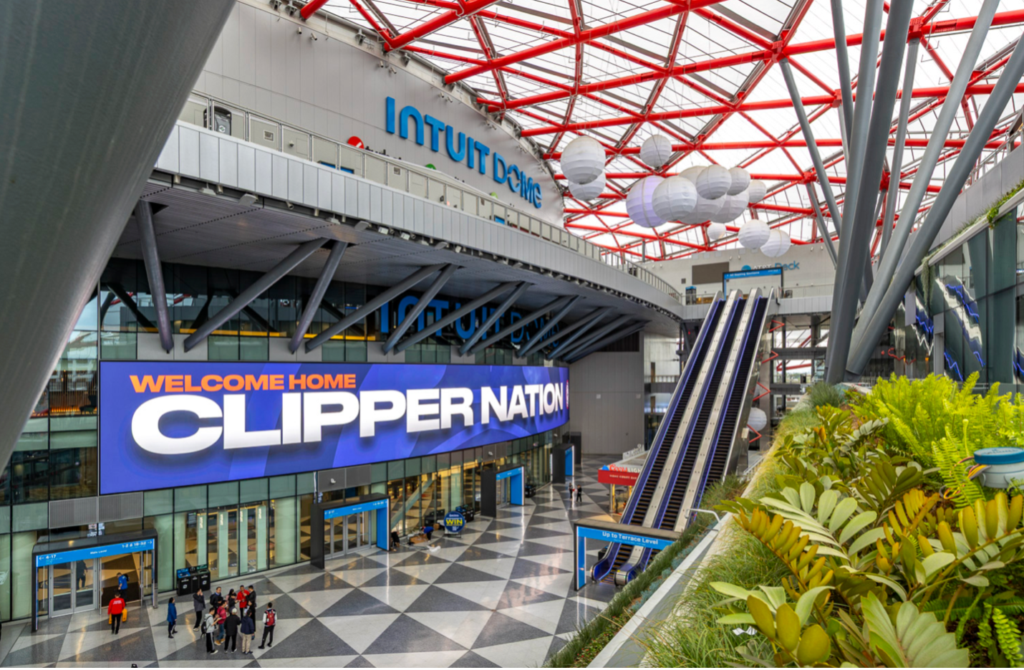
Photo credit: Kevin Korczyk, K2 Creative LLC
ETFE Roofing Supports Innovative Stadium Roof Design
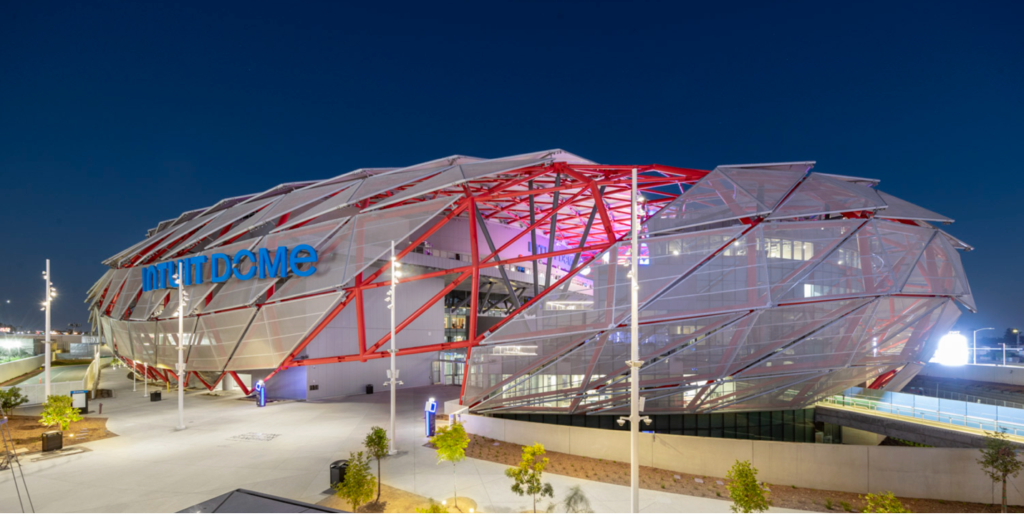
AECOM led the design of the project, shaping the arena’s distinctive diagrid exterior composed of a network of diagonal steel members forming a repeating triangular pattern across the façade. The diagrid geometry takes inspiration from the motion of a basketball passing through a net.
Working with the design team, Enclos Tensile Structure (ETS) delivered the building’s distinctive exterior skin, handling design, engineering, fabrication and installation. The vibrant red diagrid roof is wrapped with approximately 228,700 square feet of PTFE panels and 11,400 square feet panels of AGC’s ETFE (ethylene tetrafluoroethylene) film.
This innovative ETFE roofing system works alongside PTFE membranes to create a lightweight enclosure that maximizes natural light while maintaining structural performance. The interwoven PTFE and ETFE film elements form a diamond-shaped pattern that varies in function across different areas of the building.
Why ETFE Roofing Is Used in Stadiums
ETFE roofing has become a popular material for sports venues and large public buildings because it offers exceptional light transmission, weather resistance, and design flexibility. Unlike traditional glass systems, ETFE is lightweight and can span large areas while reducing structural loads. As a result, it is increasingly specified for stadiums, arenas, transportation hubs, and other large-scale architectural projects.
At the Intuit Dome, ETFE is used in areas where transparency matters most. The material allows natural light to penetrate deep into the arena, reducing the need for artificial lighting during daylight hours and supporting sustainability goals.
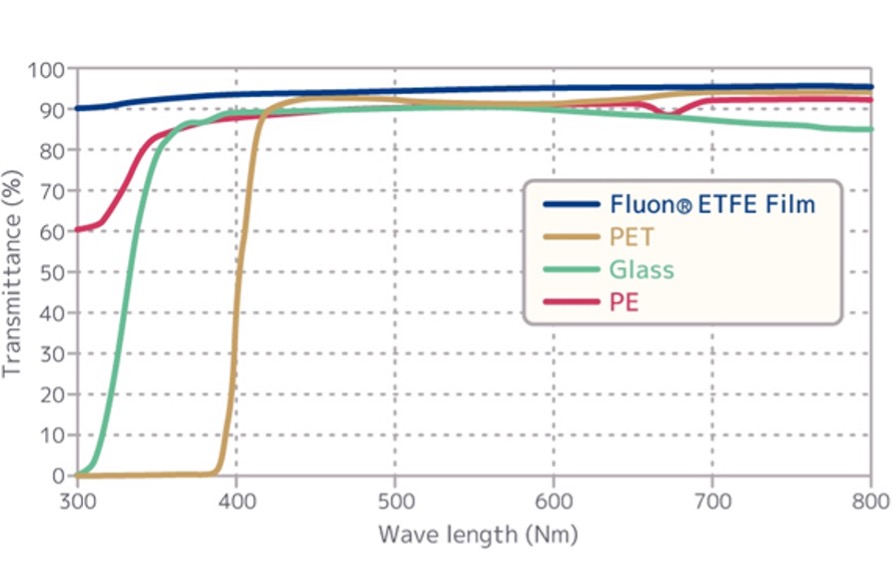
In its clearest form, ETFE can transmit approximately 90–95% of visible light while providing full protection from the elements. These characteristics make ETFE an ideal material for an ETFE stadium roof, where daylighting, occupant comfort, and energy efficiency are critical design considerations.
The Role of PTFE in Tensile Membrane Structures
While ETFE provides transparency, PTFE contributes structural performance and visual impact. The PTFE tensile membrane functions as both a structural system and an architectural façade, providing strength, efficiency and a distinctive visual identity.
Lightweight yet exceptionally strong, PTFE enables large spans and complex geometries without the bulk of traditional materials such as glass or metal panels. PTFE is commonly used in tensile membrane structures because of its durability, weather resistance, and ability to maintain performance over decades of service.
Depending on the specific weave or coating, PTFE systems can also softly diffuse daylight, helping shape the interior atmosphere while supporting environmental performance.
Advanced Materials Enable High-Performance Architecture
Arranged in a diamond-shaped lattice pattern, the PTFE and ETFE panels were digitally optimized to regulate sunlight, reduce glare, manage airflow, and provide rain protection across the façade.
The integration of ETFE roofing and PTFE membrane systems within the Intuit Dome’s diagrid façade demonstrates how advanced lightweight materials and digitally optimized design can merge structural efficiency with environmental performance. Together, these systems create a high-performing building envelope that balances durability, daylighting, and climate responsiveness while reinforcing the arena’s distinctive architectural identity.
As architects seek innovative building envelope solutions, ETFE roofing continues to gain popularity for its ability to balance durability, transparency, sustainability and design freedom.
Click to learn more about Fluon ETFE film or contact an AGC product expert.